



Five Questions about Checking for Colon Cancer
Early screening can lead to early detection
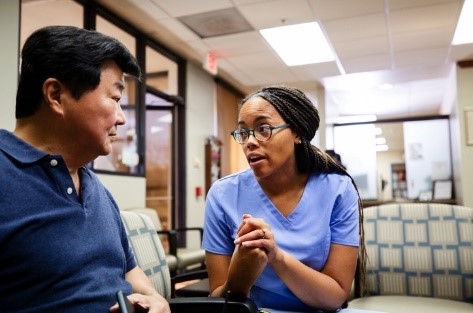 Even though colon cancer is the second-leading cause of cancer deaths in the United States, people may still find it tough to talk about. However, this shouldn't include your doctor. They can help you prevent colon cancer if possible.
Below are five questions to ask your doctor about colon cancer.
What is colon cancer?
Colorectal cancer starts in the colon (bowel) or rectum. Most colorectal cancers start with a polyp.
What is a polyp?
A polyp is a fleshy growth of tissue. Polyps are found in many different parts of the body, including the colon. Most polyps are harmless, but some can turn into cancer.
What are the symptoms of colorectal cancer?
In many cases, colorectal cancer may not have any symptoms. It is often found by using a screening test. But you should tell your doctor if you have any of the following symptoms:
Changes in your bowel patterns. These can include diarrhea, constipation, or a narrowing of the stool (feces) for more than a few days.
Bleeding from your rectum or blood in your stool.
Feeling that your bowel does not empty completely.
Cramping, frequent gas, bloating, a feeling of fullness, or vomiting.
Weight loss when you are not trying to lose weight.
Having these symptoms does not mean that you definitely have cancer. Many of these symptoms can be caused by other problems. You may need tests to know for sure what is causing your symptoms.
Should I be screened for colorectal cancer?
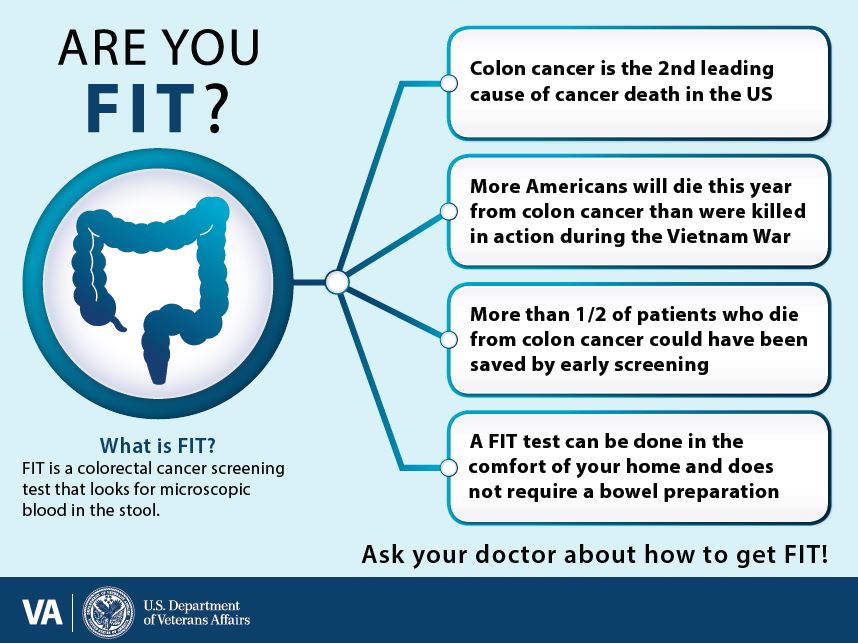
Most adults aged 50 through 75 years who are at average risk should be screened for colorectal cancer. Adults at very high risk for colorectal cancer should begin screening earlier than age 50. Several effective screening tests are available including the cards that test for blood in the stool ("fecal immunochemical test" or FIT), sigmoidoscopy, and colonoscopy. Ask your doctor when you should start screening and which test is right for you. People between the ages of 76-85 should talk to their doctor to see if screening is still needed. People over 85 do not need to continue screening.
How can I prevent colorectal cancer?
Get Screened. This is one of the best ways to prevent colorectal cancer. Screening can find early cancers that can be treated. Screening also finds polyps that can be removed before they turn into cancer.
If you are doing a fecal test at home, be sure to complete the test and return it to your clinic or lab.
If you are having a sigmoidoscopy or colonoscopy, follow your clinic's instructions for preparation. And be sure to keep your appointment.
Eat a Healthy Diet. Limit the amount of red meat and processed meats (such as cold cuts) you eat. Diets high in fat can increase your risk of colorectal cancer. To lower your risk, eat more fruits, vegetables, and whole grains (often found in bread and cereal).
Exercise. Increase your physical activity. Try to be moderately active for 150 minutes or more each week.
Manage your Weight. Being overweight can increase your risk of colorectal cancer. Visit the MOVE! page for information about the VA's Weight Management Program for Veterans.
Stop Smoking. If you quit smoking, it can decrease your risk of colorectal cancer and other diseases too.
Limit Alcohol Use. Heavy alcohol drinking can increase your risk. Men should have no more than 2 drinks a day. Women should have no more than 1 drink a day.
Please vote in our unscientific poll. All responses are anonymous.
Read More
Overview of Colorectal Cancer Screening Resources (PDF) (VA National Center for Health Promotion and Disease Prevention)
Colorectal Cancer Screening (Veterans Health Library)
MOVE! Weight Management Program (VA)
Updated June 14, 2021